Why Operating Discipline Breaks Before the Financials Do — and How to Protect Enterprise Value
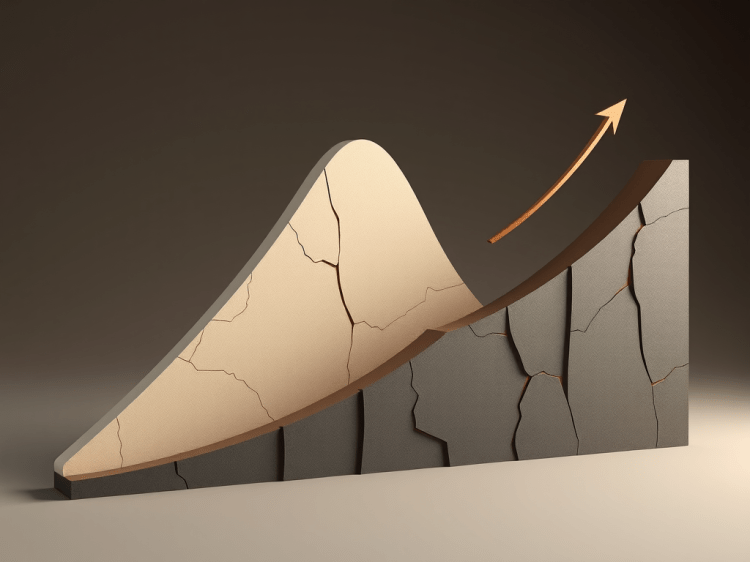
The Growth Cliff
Growth doesn’t break companies. Unmanaged growth does. From the outside, scaling looks like momentum — revenue rising, teams expanding, new opportunities opening.
Inside the business, something else starts to happen:
✨ Decision cycles slow
✨ Accountability gets fuzzy
✨ Founders become the bottleneck
✨ Meetings multiply
✨ Execution loses consistency
This is the Growth Cliff. And most companies don’t see it until performance starts to slip.
What the Growth Cliff Really Is
The Growth Cliff isn’t about flat revenue. It’s what happens when the business gets bigger — but the way it runs doesn’t mature with it.
- Strategy evolves, but how decisions get made doesn’t
- Talent grows, but ownership stays informal
- Investor expectations rise, but governance remains personality-driven
- Complexity increases faster than clarity
Early on, hustle covers the gaps. At scale, gaps turn into drag.
What worked at $5M strains at $25M. What worked at $25M fractures at $75M. Past $100M, misalignment hits the income statement — not just the culture.
Growth amplifies whatever is underneath. If the foundation isn’t built for load, scale exposes it.
Why So Many Founders Hit the Cliff
This isn’t a founder failure. It’s a founder instinct.
Founders are wired for speed. They build through relationships, judgment, and direct involvement. In the early stages, that intensity creates momentum.
But scale changes the physics.
What once accelerated growth begins to concentrate decisions. What once created alignment starts to blur ownership. What once felt nimble becomes dependent.
Growth demands something different: clear ownership. A steady operating rhythm is required. Decision rights should be defined. Talent should be aligned to role clarity — not proximity to the founder.
When those shifts don’t happen, growth doesn’t stall instantly. It creates friction. And friction compounds until it shows up in performance.
The very strengths that built the company start to slow it down.
Early Warning Signs You’re Approaching the Cliff
The ‘Financials’ are usually the last signal. The earlier indicators are ‘Operational’.
- You’re still the integration point for too many decisions
- Leaders agree in meetings but execute differently
- High performers ask, “What actually matters?”
- Cross-functional tension is rising
- Investors ask sharper questions about accountability and visibility
These aren’t personality conflicts. They’re structural gaps. If leadership alignment takes more energy than execution, the organizational and operational systems need attention.
How Companies Scale Cleanly
Avoiding the Cliff isn’t about slowing growth. It’s about building a business that can carry it.
Clean scale looks like this:
1. Redesign before stress forces it. At each growth stage—reset roles, ownership, and decision scope before they blur.
2. Separate founder identity from operating clarity. The company should run on structure — not on access to the founder.
3. Make decisions predictable. Ambiguity grows quietly — and costs real money. Every recurring decision needs: one accountable owner; clear inputs; and a known escalation path.
4. Let governance mature with the business. Board expectations, reporting, and cadence should evolve as revenue and complexity increase.
5. Measure the health of the organizational systems. Clarity. Accountability. Decision speed. Leadership alignment. These are not “soft” metrics. They are leading indicators of financial performance. Scale rewards discipline.
Reactive Scale vs. Designed Scale
At this point, companies make a choice.
One burns energy. ↔️ The other compounds value. Investors can tell the difference.
Reactive scale:
- Fixes problems after they hurt
- Swaps leaders instead of fixing structure
- Mistakes busyness for progress
Designed scale:
- Anticipates pressure points
- Clarifies roles before tension escalates
- Builds leadership capacity ahead of demand
The Real Cost of Waiting
When the Cliff is ignored, the impact shows up predictably:
- Slowed growth
- Margin erosion
- Loss of key talent
- Cultural drift
- Investor pressure
- Forced restructures
What could have been designed early becomes a reactive correction. And reactive corrections are always more expensive — financially and reputationally.
A Final Word to Founders, CEOs & Operators
🔹If growth feels heavier than it should…
🔹If alignment requires more effort than execution…
🔹If you’re pulled into decisions you shouldn’t have to touch…
You likely don’t have a people problem. You’ve outgrown the way the company runs.
Strong leaders don’t wait for pain to force change. They evolve the system ahead of scale.
Growth doesn’t have to hurt. But it does need intention.
Call to Action 💬
Scale tests everything — structure, leadership, governance, clarity.
The question isn’t whether pressure will come. It will. The question is whether your business will be ready to carry it.
Markets reward companies that evolve before strain hits. Investors back leaders who strengthen the organizational and operational systems before performance forces their hand. Teams thrive when clarity replaces proximity and discipline replaces dependency.
If you’re committed to scaling with intention, not correction, take action today. Design and build a company resilient enough to carry what’s next — and disciplined enough to capitalize on it.
 Knowledge Hub: Recent Articles and Posts