How Companies Are Empowering Mid- and Late-Career Workers to Thrive in New Collar Roles
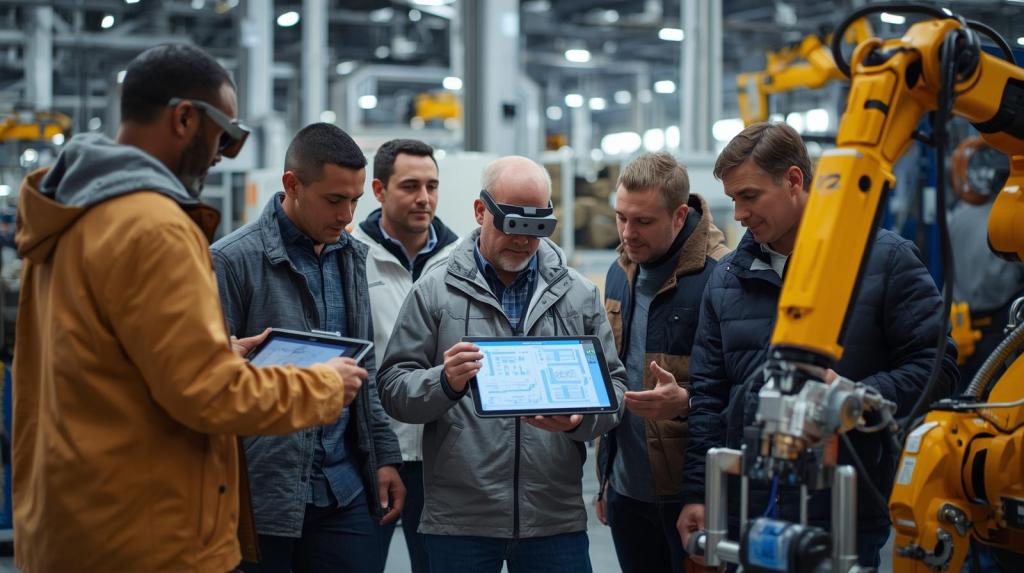
The face of work is changing — and so are the people doing it.
For decades, the term “skilled labor” meant something you could touch: precision, craftsmanship, hands-on experience. But as industries evolve through automation, AI, and advanced manufacturing, the definition of skill is expanding — merging digital fluency with the deep operational know-how of seasoned workers.
This convergence has given rise to what IBM famously coined “new collar roles” — jobs that blend technical capability with industry expertise, often without requiring a traditional four-year degree. These roles sit at the intersection of technology and trade — cybersecurity analysts, robotics technicians, process automation specialists, and AI operations leads — and they’re redefining the future of work.
The exciting part? Many of the best candidates for these new roles aren’t fresh graduates. They’re the mid- and late-career professionals who built the industries now being transformed.
Why “New Collar” Work Matters.
As automation advances, a misconception persists — that older workers can’t or won’t adapt. The data tells a different story.
A recent AARP study found that 83% of workers aged 50+ want to learn new skills, yet less than half say their employers provide meaningful opportunities. Meanwhile, manufacturing, logistics, and energy sectors are struggling to fill critical digital-enabled positions.
This isn’t about ability — it’s about access and imagination.
Forward-thinking companies are proving that reskilling is not just an HR initiative — it’s a business continuity and growth strategy. They’re turning experience into advantage by pairing institutional knowledge with emerging technology, creating a new generation of “digital operators” and “hybrid specialists.”
Leading the Way: Real-World Models of Reskilling Across Generations
Companies around the world are showing what’s possible when experience meets innovation:
🧩 IBM – Creating Pathways to “New Collar” Jobs: IBM pioneered the “new collar” concept — emphasizing skills over degrees.
Through IBM SkillsBuild, they’ve trained hundreds of thousands of learners globally, including career-transitioning professionals, veterans, and workers without college degrees. Employees learn practical skills in cybersecurity, cloud computing, AI, and project management — not in classrooms, but through applied learning tied to real projects.
The takeaway: IBM reframed reskilling as career reinvention, not remediation — a message that resonates with workers across all generations.
⚙️ Amazon – From Warehouse Associate to Data Technician: Amazon’s $700 million Upskilling 2025 initiative is retraining 100,000 employees for future-ready jobs.
Programs like Associate2Tech and Amazon Technical Academy enable warehouse workers to transition into technical roles — from robotics maintenance to software engineering. It’s a tangible example of turning the factory floor into the tech hub, empowering mid-career workers to pivot into the digital economy.
💡 Schneider Electric – Building Internal Mobility Through Skills Mapping: Facing retention challenges and a rapidly changing energy sector, Schneider Electric built an internal talent marketplace to map employee skills and match them with new projects, training, and roles.
This approach — especially powerful for mid- and late-career employees — replaces “career ladders” with career lattices, where growth is lateral as much as vertical. The result: higher engagement, stronger retention, and a culture of lifelong learning.
🏦 HSBC – Reskilling in Financial Services: In financial services, HSBC has taken a similar approach — mapping workforce capabilities against future business needs.
Through a large-scale internal reskilling program, employees are being trained in data analytics, digital finance, and AI-driven operations. By designing mobility pathways instead of replacing talent, HSBC is showing that reskilling across generations is not just a manufacturing story — it’s a universal business imperative.
🌐 Vodafone – Building the Future from Within: Vodafone’s goal is bold: fill 40% of its software-developer roles internally through reskilling.
Rather than recruiting solely from external tech talent pools, the company invests in transforming its existing workforce — including mid-career professionals from operations and customer service — into software engineers and digital specialists.
This commitment to internal development not only closes skill gaps but also honors the contributions of long-tenured employees, keeping institutional wisdom alive while the company modernizes.
The Reskilling Equation: What Works.
Across these examples, a consistent pattern emerges. The companies succeeding at reskilling across generations share three design principles:
✅ Applied learning, not abstract theory: Training that ties directly to real work — using tools, data, and systems employees encounter every day — drives faster learning and stronger retention.
✅ Cross-generational mentoring: When experienced operators and younger digital natives collaborate, both learn faster. Experience becomes a teaching asset, not a liability.
✅ Visible career pathways: People embrace change when they can see the road ahead. Companies that design career lattices and skill maps make mobility achievable and measurable.
Designing Work for Every Generation.
For leaders, the question isn’t whether to reskill — it’s how to design systems where learning and adaptation are built into the flow of work.
That means:
- Building learning ecosystems that make training continuous, accessible, and personalized.
- Redefining talent pipelines to prioritize skills and potential over credentials.
- Investing in organizational design that allows employees — especially mid-career and late-career — to evolve without leaving.
Companies that get this right don’t just fill jobs. They create cultures of resilience — where every generation contributes to what’s next.
🌍 The Human Side of the Fourth Industrial Revolution.
Technology may be rewriting the rules of work, but human adaptability is the competitive edge.
When companies invest in reskilling across generations, they’re not just closing skill gaps — they’re extending purpose, belonging, and dignity to every stage of a career. Because thriving in the new economy isn’t about age or title — it’s about curiosity, courage, and the willingness to reinvent what you know.
The future of work isn’t young or old. It’s multigenerational, multidimensional — and more human than ever.
 Knowledge Hub: Recent Articles and Posts